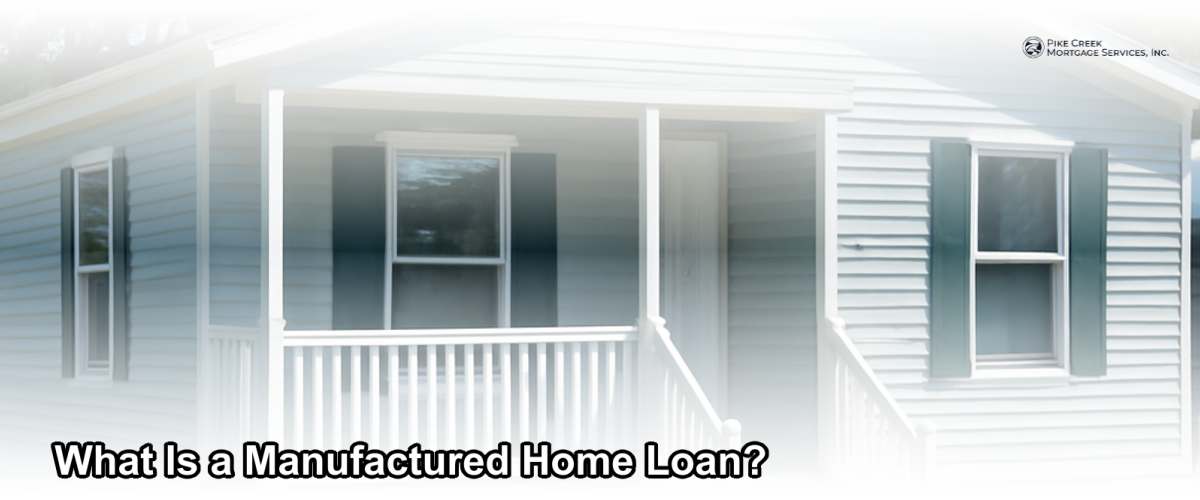
What is a manufactured home loan?
A manufactured home loan is a mortgage or financing product specifically designed to help borrowers purchase or refinance a home that was built in a factory to HUD (U.S. Department of Housing and Urban Development) standards and then transported to a site. Unlike a traditional site-built home loan, the financing options, title requirements, and qualifying criteria can differ significantly depending on whether the home is on a permanent foundation and whether it is classified as real property or personal property.
At Pike Creek Mortgages in Newark, DE, our NMLS Licensed lending team works with buyers to identify which manufactured home loan structure fits their specific property and financial situation — because not every manufactured home qualifies for the same program.
How is a manufactured home different from a mobile home or modular home?
A manufactured home is any factory-built home constructed after June 15, 1976, under the federal HUD code — this date is the key legal dividing line that determines loan eligibility. Homes built before that date are legally classified as mobile homes and face much stricter financing restrictions or may be ineligible for standard mortgage programs entirely. Modular homes, by contrast, are also factory-built but are transported in sections and assembled on-site to meet local building codes, which typically makes them eligible for conventional mortgage financing from the start.
Why does this matter for your loan? Because lenders, including government-backed programs like FHA and VA, use these definitions to set underwriting rules. Getting the classification right at the beginning of your application saves significant time and prevents surprises at closing.
What types of loans are available for manufactured homes?
Borrowers financing a manufactured home in Delaware can typically choose from several distinct loan types, each with different eligibility rules, down payment requirements, and costs:
- FHA Title II loans — Available when the manufactured home is on a permanent foundation and has been titled as real property. Minimum down payment is typically 3.5% for qualified borrowers.
- FHA Title I loans — Cover homes that may not be on a permanent foundation; loan limits are lower and terms are shorter than Title II.
- VA loans — Available to eligible veterans and service members when the home is on a permanent foundation and classified as real property; no down payment required for qualifying borrowers.
- USDA loans — May be available in eligible rural areas of Delaware for manufactured homes meeting HUD standards and permanent foundation requirements.
- Conventional loans — Fannie Mae (MH Advantage) and Freddie Mac programs exist for certain manufactured homes that meet specific construction and feature standards, often with competitive rates.
- Chattel loans — Personal property loans for homes not affixed to a permanent foundation; typically carry higher interest rates and shorter repayment terms than real-property mortgages.
Pike Creek Mortgages, serving Newark and the broader Delaware area, helps borrowers compare these options side by side so you understand the true long-term cost of each path before you commit.
What does it mean for a manufactured home to be on a ‘permanent foundation’ — and why does it matter for financing?
A manufactured home is considered permanently affixed when it is placed on a foundation system — such as a concrete perimeter or pier-and-beam system engineered to local standards — and the running gear (wheels, axles, and hitch) has been removed. This distinction matters enormously for financing because permanently affixed homes can be titled as real property (like a site-built home), which opens access to FHA, VA, USDA, and conventional loan programs. Homes on non-permanent setups remain personal property and are limited to chattel financing, which typically means higher rates and no access to 30-year fixed terms.
In Delaware, the process of converting a manufactured home from personal property to real property involves recording a deed and filing an affidavit of affixture with the county — steps our team at Pike Creek Mortgages can help you navigate before your loan application is submitted.
What credit score and down payment do I need for a manufactured home loan in Delaware?
Minimum credit score and down payment requirements vary by loan type, but here are the general benchmarks for Delaware borrowers working with Pike Creek Mortgages:
- FHA Title II: Minimum credit score of 580 for 3.5% down; scores between 500–579 typically require 10% down.
- VA loan: No official minimum credit score set by VA, but most lenders require at least 580–620; 0% down for eligible borrowers.
- Conventional (Fannie Mae MH Advantage): Typically requires a minimum score of 620 and as little as 3% down for qualifying properties.
- Chattel loans: Requirements vary widely by lender; expect higher rates regardless of credit profile compared to real-property mortgages.
Keep in mind that debt-to-income ratio, employment history, and the age and condition of the home also factor into approval. See our related guide on improving your mortgage qualification profile for additional preparation strategies.
What are the hidden costs or extra steps involved in a manufactured home loan?
Manufactured home loans often involve costs and steps that don’t come up with a standard site-built mortgage — knowing these in advance keeps your budget and timeline accurate.
- HUD certification label verification: Lenders and appraisers will confirm that the red HUD certification labels are attached to the home. If labels are missing, a label verification letter from HUD’s Institute for Building Technology and Safety can cost $100 or more per label and takes time to process.
- Foundation inspection: FHA and VA loans require a foundation inspection by a licensed engineer confirming the home meets HUD Permanent Foundations Guide standards. Engineer inspection fees in Delaware typically run $300–$600.
- Title conversion costs: If the home’s title needs to be converted from personal property to real property before closing, expect recording fees and potential legal or title company fees.
- Appraisal complexity: Manufactured home appraisals can be harder to complete because comparable sales are sometimes limited, which may affect value conclusions and loan approval timelines.
- Land ownership vs. leased land: If the home sits on leased land (such as in a land-lease community), financing options shrink considerably — most real-property loan programs require you to own the land.
Pike Creek Mortgages in Newark, DE, reviews these factors with every manufactured home borrower upfront so there are no surprises during underwriting.
Is buying a manufactured home a good financial decision in Delaware?
Manufactured homes can be a sound, cost-effective path to homeownership — particularly in Delaware’s competitive housing market, where site-built home prices have risen sharply in many communities. The purchase price per square foot for a manufactured home is typically significantly lower than for a comparable site-built home, and modern HUD-code construction means today’s manufactured homes are built to strict safety and energy standards. The financial calculus does depend on whether the home is on owned land (which builds equity similarly to a site-built home) versus leased land (which limits long-term equity accumulation). As covered in our broader mortgage planning resources, understanding total cost of ownership — including site costs, utilities, and loan terms — is essential before making this decision.
This guide was prepared by Pike Creek Mortgages’ NMLS Licensed lending team, serving Newark, DE and communities throughout Delaware.
Frequently Asked Questions
What is the difference between a manufactured home loan and a regular mortgage?
A regular mortgage finances a site-built home classified as real property. A manufactured home loan may follow the same structure — but only if the home is on a permanent foundation and titled as real property. Manufactured homes on non-permanent setups require chattel (personal property) loans, which carry higher rates and shorter terms than standard mortgages.
Can I get an FHA loan for a manufactured home in Delaware?
Yes. FHA offers two programs: Title II for manufactured homes on permanent foundations titled as real property (minimum 3.5% down with a 580+ credit score), and Title I for homes that may not meet permanent foundation requirements, though with lower loan limits and shorter terms.
Does a manufactured home have to be on land I own to qualify for a mortgage?
For most government-backed and conventional mortgage programs, yes — you generally need to own the land the home sits on. Homes on leased land in communities are typically limited to chattel financing, which means higher interest rates and no access to 30-year fixed loan terms.
How old can a manufactured home be and still qualify for financing?
The home must have been built on or after June 15, 1976 (the date HUD code standards took effect) to qualify for FHA, VA, or conventional programs. Lenders may also have additional age restrictions — some conventional programs require the home to be no more than a certain number of years old. Pike Creek Mortgages reviews age eligibility during pre-qualification.
What is a chattel loan for a manufactured home?
A chattel loan treats the manufactured home as personal property rather than real estate, similar to how a car loan works. It is typically used when the home is not on a permanent foundation or sits on leased land. Chattel loans generally carry higher interest rates and shorter repayment periods — often 15 to 20 years rather than 30 — compared to real-property mortgages.
Leave a Reply